

Our thinking about play has been influenced over the years by the work of many childcare specialists. What has emerged from all of this thinking is a set of common principles which can be found in the Early Years Foundation Stage (EYFS) and Jancett have adopted these beliefs and believe in the importance of learning through play both purposefully and child initiated to support the principles. Therefore, your children will learn and develop through planned purposeful play as well as the chance to explore, investigate and problem solve.

Sand Play
Children learn about the world through their senses and their first response to sand and water is a sensuous one: they feel, massage, churn, smell and pat it, sometimes for very long periods, taking pleasure just in the tactile experience. It has a multitude of learning potential such as Early Mathematical Experiences in capacity, size, weight and shapes.
Small World Play
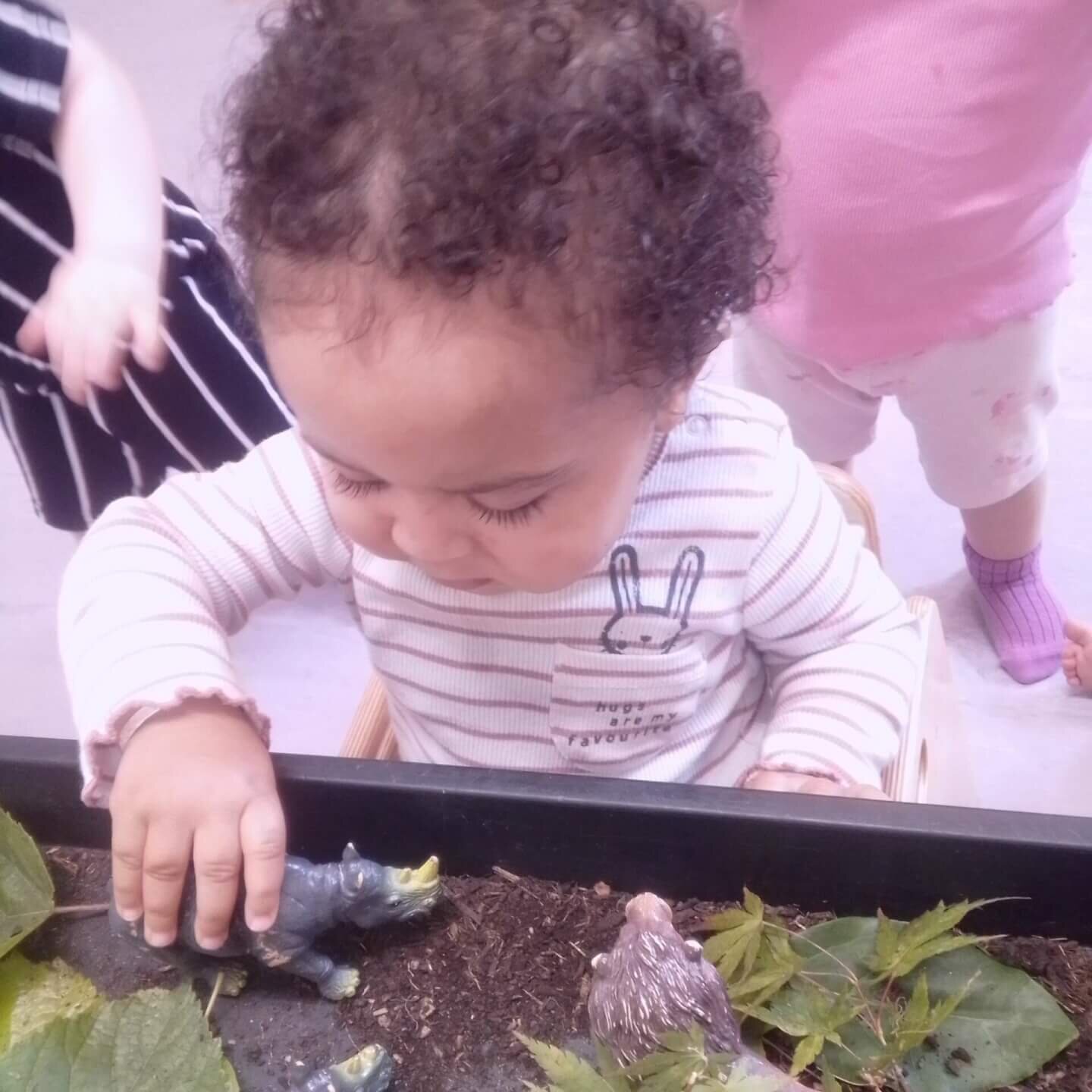
Small world play is a type of imaginative/role play, which enables children to be creative and spontaneous in exciting as well as everyday life situations which interest them.
Significance of small world play to children’s learning is that it encourages talking (all kinds of language use) and listening (when children play together). It allows children to create stories around things they know e.g., people and animals. It also allows children to fantasise about experiences that they haven’t had.
Songs, and rhymes
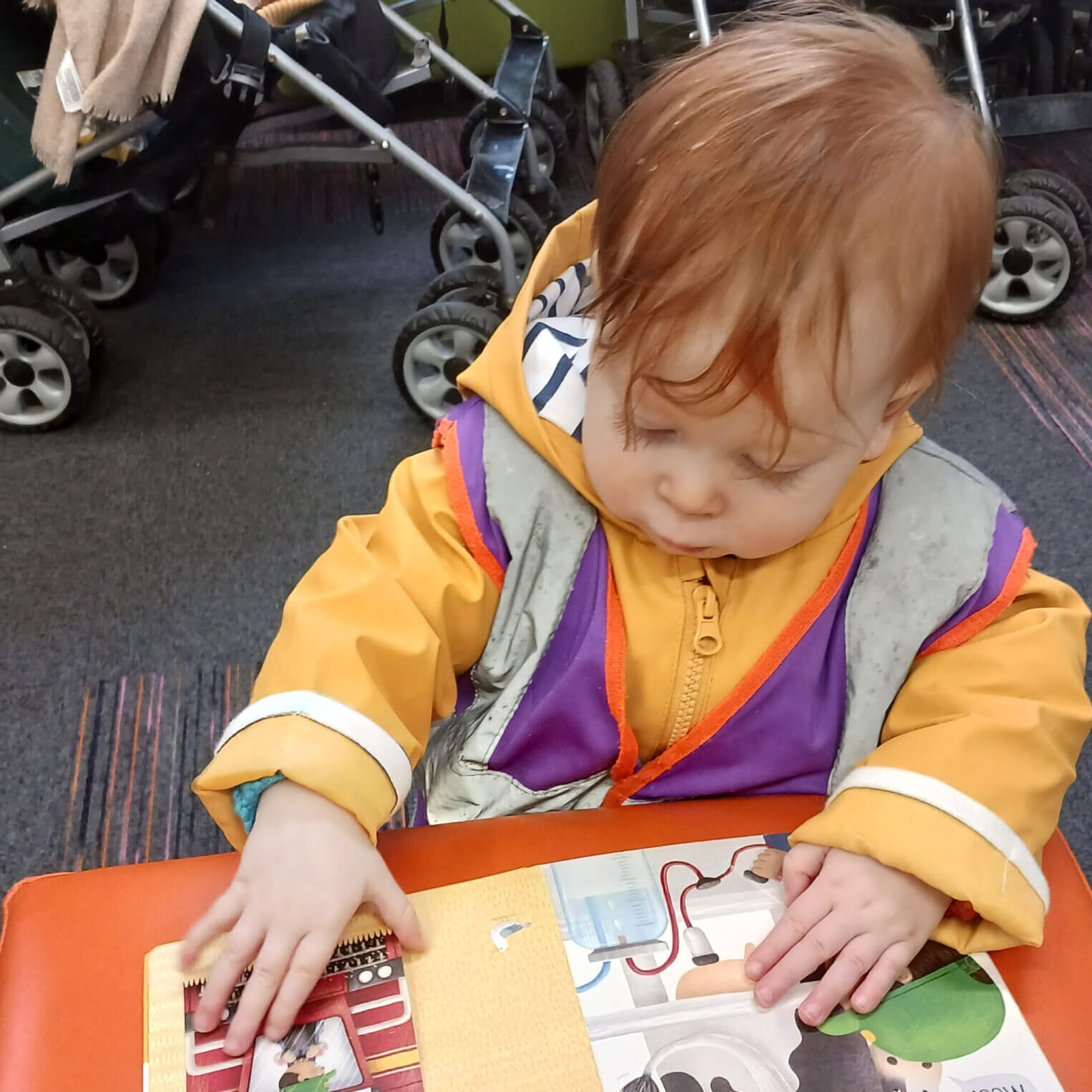
Songs, and rhymes are integral to children’s communication and language skills. They help children learn to listen, enjoy rhythmic patterns, and pay attention to sounds. Through these experiences, children also develop the ability to follow others’ body language and express themselves more effectively. Additionally, the shared experience of singing fosters social connections, boosting confidence and cooperation among peers. These activities foster early literacy and lay a strong foundation for future learning.
Examples of this include:
Creative play
Painting, role play, art and design, movement and music and small world activities. Children can explore colour, shape, and texture, explore the properties of malleable materials – rolling, squeezing, stretching; respond freely to music through movement and mime, develop fine motor skills through using a range of tools and materials e.g., brushes of different sizes, rollers, sponges, glue-sticks, spreaders, and scissors, talk about what they have done with confidence and experience a sense of achievement.
Construction
Junk modelling, block play, train tracks, Popoids. Children are encouraged to explore the shapes, forms, colours, and patterns of a variety of construction material, use blocks, commercial and junk materials to create props for imaginative play e.g., stories Three Little Pigs, develop gross motor skills e.g., lifting, carrying, holding large pieces of construction materials, develop independence in constructing with different materials.
Outdoor play
Physical and Understanding of the World – Team games, assault courses, movement, bikes, planting, growing, experiencing different weathers.
Children are given the chance to be exuberant, energetic, and loud. Staff provide activities to motivate children to be active developing fine and gross motor skills. Opportunities to learn about the immediate environment are offered, such as planting, growing, and looking at different bugs where children notice detailed features of their environment and ask questions about the natural world.