


20 May Embracing the benefits of Risky Play for under 5’s
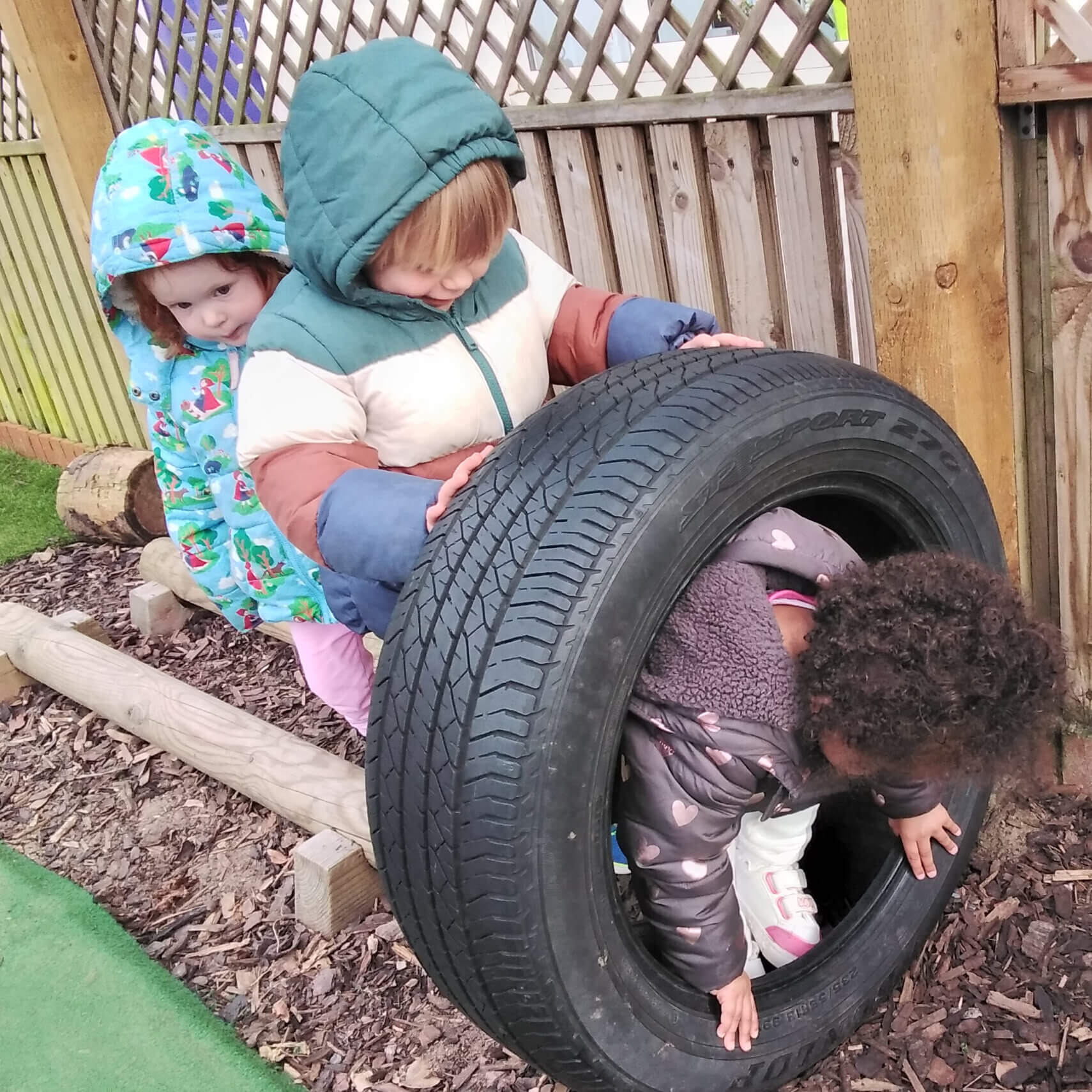
In a world where safety concerns often dominate our parenting decisions, it’s easy to underestimate the value of risky play for our young children. However, embracing and encouraging risky play can offer many benefits that contribute to their holistic development. So, let’s dive into the exciting world of risky play and explore what it is, how to encourage it and why it’s so beneficial for children under 5.
PHYSICAL DEVELOPMENT
Risky play challenges children’s physical abilities in ways that structured activities may not. Climbing, jumping, and balancing on uneven
surfaces help develop balance, coordination, and strength, laying a solid foundation for their physical skills.
EMOTIONAL RESILIENCE
By taking calculated risks and overcoming challenges, children build emotional resilience. Facing small dangers and learning to cope with
fear and uncertainty in a safe environment prepares them to navigate life’s inevitable ups and downs with confidence.
SOCIAL INTERACTION
Engaging in risky play often involves cooperation and collaboration with peers. Negotiating rules, sharing resources, and taking turns promote social skills such as communication, teamwork, and empathy, all of which are essential for healthy relationships.
 CREATIVITY AND PROBLEM-SOLVING
Risky play encourages children to think outside the box and come up with creative solutions to overcome obstacles. Whether they’re building a makeshift bridge or planning an escape plan from imaginary pirates, these experiences foster imaginative thinking and problem-solving skills.
SENSE OF ACHIEVEMENT
Successfully completing a challenging task or conquering a fear during risky play boosts children’s self-esteem and confidence. These
moments of triumph instil a sense of pride and accomplishment, motivating them to tackle new challenges with enthusiasm.
INDEPENDENCE AND SELF-RELIANCE
Risky play encourages children to take initiative and explore their surroundings independently. As they learn to navigate risks and solve
problems on their own, they become more self reliant and confident in their abilities.
UNFORGETTABLE MEMORIES
Some of the fondest childhood memories are often associated with moments of adventurous play and exploration. Whether it’s building
secret forts in the woods or splashing in muddy puddles, these shared experiences create lasting bonds and cherished memories for both children and parents alike.
 RISK ASSESSMENT SKILLS
By engaging in risky play, children learn to assess risks and make informed decisions about their actions. Over time, they develop a better
understanding of their own capabilities and limitations, empowering them to make safer choices in various situations.
CONNECTION WITH NATURE
Many forms of risky play take place outdoors, allowing children to connect with nature and develop an appreciation for the natural world.
Exploring natural environments stimulates curiosity and fosters a sense of wonder and respect for the environment.
STRESS RELIEF AND MENTAL WELL-BEING
Engaging in adventurous play can be exhilarating and provide a much-needed release of pent-up energy and stress. The thrill of risky
play promotes feelings of joy, excitement, and freedom, contributing to children’s overall mental well-being.

HERE’S TO RAISING FEARLESS ADVENTURERS WHO APPROACH LIFE WITH A SENSE OF WONDER AND EXCITEMENT!
Risk-Taking Play Activities
- Moving fast on own or on riding toys
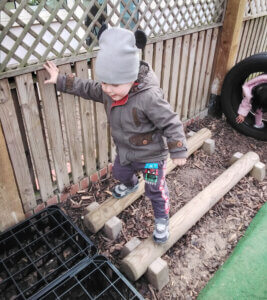
- Balancing on balance beams or low ledges
- Rough-and-tumble play
- Moving heavy objects
- Climbing & jumping
- Hanging & swinging
On the Playground
- Hanging from bars
- Sliding down poles
- Climbing stairs, rock walls, nets, and ladders
- Climbing up slides
- Swinging
- Standing on swings or swinging on the belly
- Flipping over bars
- Walking on balance beams
- Tag and chase games
- Dodgeball
Outdoors in Nature
- Running up and down hills
- Rolling down hills
- Climbing trees or large rocks
- Jumping from tree stumps or into water
- Balancing on fallen logs
- Carrying, rolling, or pushing heavy objects such as rocks, branches, and buckets of water or sand
- Crossing streams
- Sledding
Indoors
- Balancing
- Step stools
- Stilts
- Balance steppingstones
- Jumping
- Trampoline
- Bed or couch
- Cushions
- Climbing
- Spinning
- Rough-and-tumble play
- Obstacle courses
- Heavy work
- Moving baskets of heavy objects
- Rolling in blanket burritos
- Toppling giant blocks
- Beanbag dodgeball
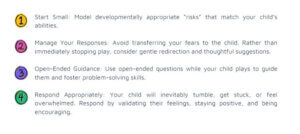
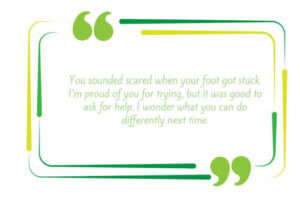
TIPS FOR PARENTS AND GUARDIANS
FURTHER READING/BIBLIOGRAPHY
Brave Kids: The Ultimate Guide to Risk-Taking Play (wellbeingswithalysia.com)
What are the benefits of Risky Play? – BBC Tiny Happy People
How to Introduce more risky play in the early years | Family