

08 Aug Let imagination lead the way
For the purposes of this blog we’d like to ask you to temporarily suspend disbelief and join us for something out of the norm and utterly magical and fun. From hosting a teddy bears picnic to opening your own shop, from meeting a monster to Makeup – the imaginative world of of a young child knows no bounds!
As Picasso once said “Every child is an artist. The problem is how to remain an artist once he grows up.” Imaginative play plays an important part in a child’s development. It can have a wide range of benefits, including enhancing a child’s learning, social development, language and observation skills, and physical development.
#Practice makes perfect
Our nurseries offer imagination rich play opportunities every day for our under 3’s, but the wonderful thing about the imagination is that it can be sparked everywhere and us adults can join in the fun anytime too. Very young children will most likely centre their play around something they’ve seen you do in real life, and they will want to use ‘props’ they’ve seen you using – such as your hat, shoes or your phone. At this young age, repetition is key and we all know how much toddlers love to repeat a ritual. Get ready to pretend ‘chomp’ on that plastic cake slice to excited little giggles multiple times over. Trying to introduce a new story into their bed time routine? What a great idea, but why do that when you can all read Room on the Broom for the 100th time that week instead?!
#Social Development
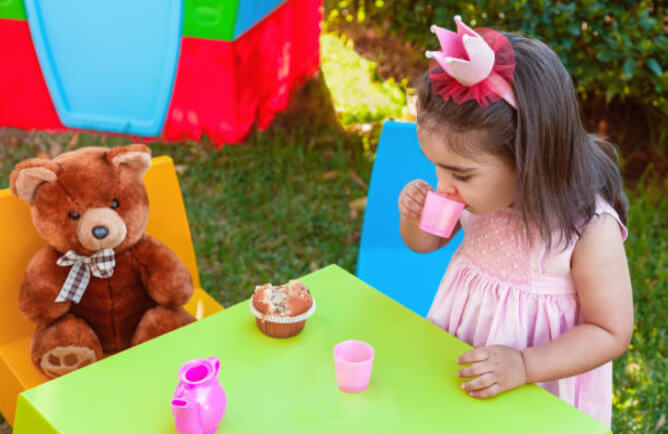
Photo credit: Pinterest
Now nearly two years of age, our JACE Tutor / Assessor Rebecca’s son Finley loves to include mummy and daddy in his imaginative role play. Finley especially loves to ‘go shopping’. He has his own recyclable shopping bag and loves it whenever mummy asks him to ‘go to the shops’ for her. On one recent occasion, Rebecca asked Finley to ‘buy’ some milk and off he went to the kitchen (‘the shop’) and came back with the huge four pint bottle. Imaginative play has helped Finley’s comprehension skills – he understood exactly what mummy was asking for, what milk was and where to find it.
Finley also loves a tea party and happily “cheers!” mummy’s toy tea cup against his, which is helping him practice his social skills and learn how to interact with others.
#Language and Observation Skills
JACE Tutor Paula’s 2 year old granddaughter Bella loves food shopping too – always for chicken and cheese, Paula says. Because of her imaginary shopping, Bella is increasing her knowledge of different foods and improving her vocabulary. Bella also uses her toy phone or mummy’s real mobile to pretend ‘face time nanny’ or hold imaginary conversations on the phone, enhancing her speaking and language skills. Bella loves to copy nanny and mummy and do her ‘make up’ or paint her nails like them. Paula shares a funny story of Bella watching mummy having her eyebrows waxed at the beauty salon and, once they’d got home, Bella put play dough on her own eyebrows and said “ouch!” when she took it off – exactly like mummy had in the salon. Similarly, Finley has a toy wheel he can attach to his car seat and he loves pretending to drive the car for mummy and daddy, imitating the car horn, beeps and indicating sounds he hears on the road.
Imagination v reality (a little cautionary tale)
As many parents and carers know, children love watching cartoons, so meeting their favourite characters in person might sound like a dream come true. Family run theme parks like Gullivers World, Disney World or Peppa Pig World at Paulton’s Park all cater to very young children and offer a fun family friendly day out. However, if it’s your family’s first visit, be prepared for a child to feel a little anxious about the encounter, even if they appear super excited on the car journey there. This happened when Finley’s parents took him to Peppa Pig World earlier this year and Finley was afraid of the Peppa mascot. Rebecca explains that children probably imagine their favourite cartoon character to be the same size they appear on screen or roughly the size of their soft toy (i.e. much smaller than them). A mascot can appear – and really is – enormous in comparison. This blog shares tips on how to cope if a child is wary of a mascot character. It is worth mentioning here that the reverse can also be true and toddlers may become overwhelmed and cry simply because they’re so happy to meet their favourite character. As a parent or carer, maybe prepare yourself for both…
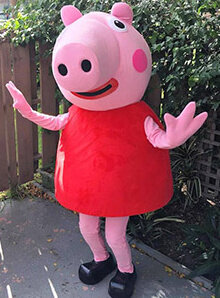
Photo credit: www.partycharactersforkids.com
Our own much loved company mascot Jazzy the Elephant is prepared for both reactions whenever he visits the children at our nurseries – for instance, for our 50th Anniversary Jazzy fun walks earlier this year, or at our annual Jancett summer fair. Jazzy will always try to meet the children in a large open space like our nursery gardens where he doesn’t appear quite so large in relation to his surroundings, and his supervisor is always on hand to guide Jazzy and gently reassure or chaperone a child if they’re nervous about approaching him but still want to say hello.
#Physical Development
Can you remember being a child and hanging off a perilous cliff face (the back of the sofa) or trying not to fall into an erupting volcano (avoiding the cracks in the paving)? As we immersed ourselves in play, we learnt balance and coordination skills – not to mention impressive survival skills – in the process. For toddlers, imaginative play can help them to develop motor skills, perception skills, stamina, strength, and, in Finley’s case with his trips to the shops, a lot of physical activity.
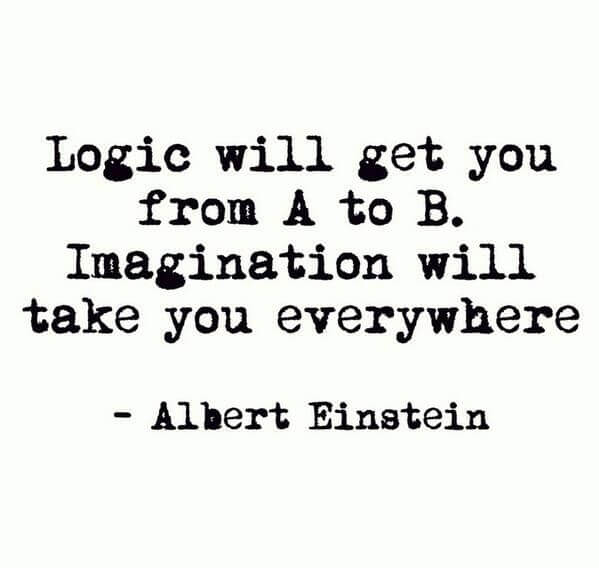
As we approach our official 50th Anniversary date on the 1st September 2019, we’d like to thank all staff that have worked in our nurseries and out of school clubs over the past 50 years for sharing their endless imagination and creativity with the children, and we’d like to finish the blog with a quote from Albert Einstein:
Image credit: Pinterest
We would value your feedback on our blog and what you would like to see in a future blog. Please email us here