


27 Apr Making Health Checks Fun!
Making Health Checks Fun!
Going to the Doctor, the Optician and the Dentist
Doctor
Taking a young child to the doctor’s surgery can be a daunting task for any parent. Regular health and developmental reviews (health visitor checks) will be offered to each baby until they are two. Shortly before or after the baby is born, parents are given a personal child health record. This usually has a red cover and is known as the ‘red book’. The book is used to record the child’s weight and height, vaccinations and other important information.
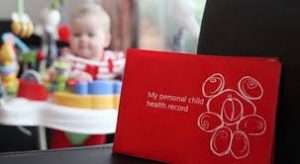
Image credit: Pinterest
Prior to going to the doctor’s surgery, parents can speak to their child about what goes on at the doctors. Explaining what the doctor does, how the doctor does it and for what reasons will help children to feel at ease in the doctor’s surgery.
Parents can play a body parts game. Having the child name body parts as the parent points to them is a great way to spend the time waiting for the doctor. Reading books at home and whilst in the waiting room is a perfect way to engage children.
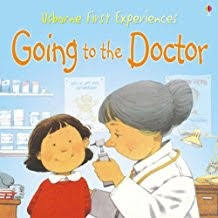
Point to pictures in the book, let the child know what the objects are. Talk about the stethoscope, the otoscope, the medicines, the doctor and his clothing. Parents and nursery carers would read the book or watch the video by Jean and Gareth Adamson called ‘Topsy and Tim GO TO THE DOCTORS’. (Watch the video below).
At the Jancett nurseries the childcare practitioners help prepare children for visiting the doctors and the hospital by setting out activities that relate. This can include a ‘doctors or hospital’ role play area. The children love wearing doctors and nurses outfits and role playing a doctor, a nurse or a patient.
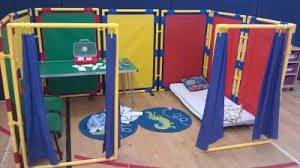
Photo provided by Ripples Pre-school, Carshalton
Teddies and dolls can also have pretend health checks, as well as having plasters and bandages wound around them.
At nursery, the older children engage in conversations with the nursery staff about what a doctor does. This would include explaining such procedures as listening to the child’s heart and lungs with a stethoscope. Then asking, “why do you think a doctor listens to your heart?” Speaking about the job the doctor performs will make the surgery and appointment seem more familiar which allows the child and the parent or carer to relax.
Dentist
Taking children to the dentist is necessary to keep their teeth heathy and promote excellent oral hygiene habits. But, think about it from a child’s point of view, a trip to the dentist can be a scary event… Lying on a chair in an unfamiliar room filled with unfamiliar noises and objects, all while a stranger is poking cold, metallic and unusual instruments in his mouth. To help ease future visits for the child (and for the dentist!) consider following these steps so that the child will feel comfortable and more relaxed.
– Start Young The earlier a child visits the dentist, the better. It’s best that the first visit starts at age 1 or when the first tooth is visible.
– Keep it simple When preparing for a visit – try not to include too many details. Keep a positive attitude when discussing an upcoming visit, but don’t give the child false hope.
– Watch Your Words Don’t use the ‘H’ (hurt) or ‘P’ (pain) words with children. Let the dentist introduce his or her own vocabulary to children to help them get through difficult situations. Joel H. Berg (Director of Dentistry at Seattle Children’s Hospital) suggests telling the child that the dentist is looking for ‘sugar bugs’ so he can clean them off their teeth. Parents can help by telling their child that the dentist is going to check their smile and count their teeth. Using positive phrases like “clean, strong, healthy teeth” to make the visit to the dentist seem fun and good rather than scary and alarming.
– Consider a pretend visit At nursery and at home play pretend with the child at being the dentist and the patient. All you’ll need is a toothbrush. Count the child’s teeth by starting with number 1. Avoid making drilling noises. Hold up a mirror and show the child how the dentist might look at and change his or her teeth.
– Share Picture Books – with detailed illustrations and easy-to-understand language, such as Dora the Explorer.
– Don’t make the MISTAKE of taking your child with you on your own dentist appointment. Parents might feel anxious about the visit without even realising it, and their child may sense those fears.
– Prepare for some fussing – Dr Haughseth (American Academy of Paediatric Dentistry) points out it is normal and age-appropriate for a young child to cry, whine, wriggle and not want to be examined by a stranger. The dentist and dental staff are used to working with children. The dental care professionals may ask the parent to hold little one’s hand, though staying at a distance.
– Avoid Bribery – instead every once in a while, surprise the child with a sticker as an encouragement.
Parents and nursery carers should emphasise the importance of Good Oral Hygiene.
Optician
Recent UK statistics show that over half of children never attend their free eye check and research also suggests that 50% of childcare have visual problems which will cause under performance in school (McCrystal Opticians, 2016).
Look out for child friendly opticians that make the eye examinations fun and interactive for their younger patients. These opticians will also offer a fantastic choice of frames to suit all ages, styles and budgets.
Tesco Opticians wrote a blog (1st June 2016) which suggested 5 tips for making wearing glasses fun for children:
1. Let children pick their own frames.
2. Parents and carers should show children how much they like glasses. If the adult does not need glasses then buy a pair with clear lenses whilst the child is getting used to theirs so the child does not feel ‘different’.
3. Begin by wearing the glasses for fun activities.
4. Point out how common wearing glasses is.
5. Expose children to books and TV shows which characters wearing glasses. The popularity of the Harry Potter book series and films had children worldwide crossing their fingers during their eye tests in the hope that they’d be told they needed glasses like their fictional hero.
Behind the fun there is a very important message for children and parents – always look after your eyes from an early age. The eye develops critical brain connections in the first eight years of life and 80% of learning is visual for children up until the age of 12, so the importance of good eye health for primary school age children cannot be stressed enough.
A 20-minute eye test is simple, painless and child friendly opticians will make children feel happy and at ease.
See the NHS website for information about NHS eye screenings and tests for children.
To surmise preparing children for routine health checks at the doctors, dentist and the opticians helps allay fears through childhood and into adulthood.