

09 May Self-regulation, Co-regulation, and Resilience

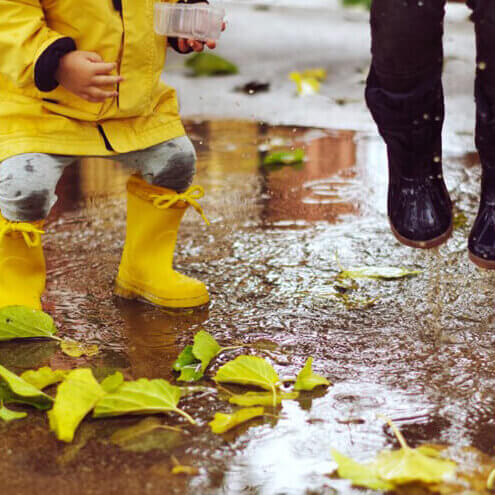
“Life isn’t about waiting for the storm to pass…It’s about learning to dance in the rain.” (Vivian Greene)
Self-regulation, Co-regulation and resilience in the Early Years
Hello everyone,
Today I bring you a blog post about self-regulation, co-regulation, and resilience. These aspects of child development have always been around. However, with the revised Development Matters (a government guide to assessing Child Development, updated 2021) and noted struggles that have arisen from the pandemic, these themes now seem more relevant than ever.
I must admit that it was hard to summarise the wealth of high-quality information on this topic into a single blog and so if you would like more detailed information, then please check out the links at the bottom of this blog.
Let’s start with the question, what is self-regulation? Surprisingly, there is no set definition but the following explanation is a useful reference and helps describe the focus of this blog: ‘Self-regulation involves children’s developing ability to regulate their emotions, thoughts and behaviour to enable them to act in positive ways toward a goal’ (Self-regulation – Birth To 5 Matters)
Development Matters places ‘self-regulation and executive function’ as one of the key features of effective practice by educators of children.
 Executive function includes the child’s ability to:
- hold information in mind
- focus their attention
- think flexibly
- inhibit impulsive behaviour.
These abilities, in turn, contribute to the child’s growing ability to self-regulate through:
- concentrating their thinking
- planning what to do next
- monitoring what they are doing and adapt
- regulating strong feelings
- being patient for what they want
- bouncing back when things get difficult.
‘Language development is central to self-regulation: children use language to guide their actions and plans.’ (DM;2021)
 What is resilience? ‘Resilience is the ability to cope with adversity or to come back even stronger after a difficult or stressful experience’ (What is resilience and why is it so important for children? – ISPCC)
When looking at self- regulation and resilience together there is a very close link. When an adult or a child has the ability to self-regulate their behaviour; pinpoint their emotions and regulate their feelings, they are better equipped to manage the strains and struggles that life may bring. This supports a positive mental health, leading to a better quality of life.
What is co-regulation – ‘Self-regulation grows out of co-regulation, where adults and children work together toward a common purpose, including finding ways to resolve upsets from stress in any domain and return to balance’ (What is resilience and why is it so important for children? – ISPCC)
- Children require support to self-regulate their behaviour and learning to self-soothe themselves by making sense of their experiences and learning from them.
- When feelings are in balance, a child begins to develop cognitive skills to make decisions about their thoughts, feelings and behaviour, which equals self-regulation
- Co-regulation is an interpersonal experience and involves being present and attuned to the child’s needs in the moment of stress
How we interact with children will set them on their path to developing rich language, to voice emotions and strong feelings that come from secure attachments. One of my favourite Ted Talks is brought to you by 7 year old Molly Wright – How every child can thrive by five. She explains how a game of peek-a-boo can change the world, it is well worth a watch!
 Why is it important to support the development of self-regulation and resilience for children under Five? As mentioned above, life can throw us sideways sometimes and research shows that resilient adults that are able to regulate their emotions and behaviours find these bumps in life easier to manage, not letting the down periods affect their mental health, leading to a better quality of life. I think we can all agree that this is what we want for our children and their futures.
Earlier this year, my colleague Jo Jenkins, our 2-5 Education Lead, posted an insightful blog about Mental Health. Take a look and see the positive links between self-regulation and mental health – The EYFS and the focus on Children’s Mental Health – Jancett Childcare.
Behaviour is communication – I recently heard this term at our full team CPD day and it provided so much clarity. If we can figure out the reason behind a child’s behaviour, we are better equipped to co-regulate with them. But how does this link to self-regulation? If children understand their emotions; have the tools to effectively manage strong feelings; and have supportive adults around them that co-regulate alongside them, their behaviour will be positively impacted. Self and co- regulation techniques allow us to remain calm and collected which leads to action based on solutions rather than anger, upset or feeling low.
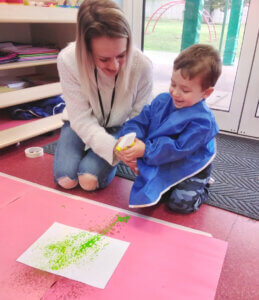 As you are aware, Jancett holds communication and literacy development at the very core of our curriculum. We understand that when children have the opportunity to develop a rich vocabulary, they are able to use language to voice their needs effectively. In addition to this, children with secure descriptive language can provide context and with context comes understanding and with understanding comes problem solving. These skills will provide children with the tools they need to self-regulate and therefore a growing resilient nature.
To finish, I would like to offer some ‘top-tips’ to promote self-regulation and to a child developing resilience:
- When appropriate, notice and talk about a child’s feelings
- Recognise, talk about and expand on a child’s emotions
- Teach children ways of solving conflict
- Encourage children to express their feelings if they feel hurt or upset, using descriptive vocabulary
- Help and reassure them when they are distressed, upset or confused
- Give children strategies for staying calm in the face of frustration
- Help children elaborate on how they are feeling
- Encourage children to express their feelings
- Help children to express what’s angering them, by suggesting words to describe their emotion
- Help further by explaining in simple terms why you think they may be feeling that emotion
- Help toddlers or children who are having tantrums by being calm and reassuring
Through researching this topic, I have found that in life there will be a ‘storm’ for all ages but it’s our responsibility to ensure children know how to dance in it!! “Life isn’t about waiting for the storm to pass…It’s about learning to dance in the rain.” (Vivian Greene)
I hope you enjoyed the read and that the information is thought provoking – as always if you have any questions, suggestions or comments feel free to contact me directly at [email protected]
Resources and further reading:
- https://nipinthebud.org/child-mental-health-conditions/
- https://www.mentallyhealthyschools.org.uk/about/
- https://www.suttonuplift.co.uk/
- https://www.acamh.org/events/
- https://www.fledglings.org.uk/
- https://www.place2be.org.uk/
- https://www.mencap.org.uk/
- https://www.nspcc.org.uk/
- https://www.twinkl.co.uk/
- https://www.annafreud.org/
- Self-regulation – Birth To 5 Matters).
- Resources | Anna Freud Centre Resource Centre for Parents and Carers