
11 Mar STEM – Science, Technology, Engineering and Mathematics
‘Too often we give children answers to remember, rather than problems to solve’ – Rodger Lewin
‘Play is the highest form of research’ Albert Einstein
 What is STEM, and why is it important?
STEM – Science, Technology, Engineering and Mathematics. These four areas combined will introduce children to new concepts, ideas, and innovative thinking. Through the use of adult guided activities children can have the chance to experience a very hands-on approach to STEM development.
Children are naturally curious, and this drives the desire to learn the ways in which things work, why they work, how they work, and make changes to the way it works. During their earliest years, children learn at a very fast pace, setting behaviours that will create lifelong skills.
STEM is a child-centred approach that encourages children to investigate the world around them. The activities that can be provided have the power to help children experience a first-hand approach to learning.
‘What happens if I do this?’ ‘Hmm that did not work, I am going to try another way’. These are some of the thought processes behind STEM development. If you have ever seen a baby with a shape sorter, the naturally occurring persistence and determination you can see, while they are figuring out what they need to do for the shape to fall into the sorter. Here are the beginnings of STEM development. Every time the baby tries to get the shape in the box, their neural pathways are developing, becoming stronger and stronger with every try, until they master it. The look of pride when this happens can melt your heart. The development behind this achievement is secured because the baby has lived the learning.
 How can STEM support my child’s future?
STEM learning filters out into every day, real life situations. For example, the perseverance to find a solution or the skills to ‘think outside the box’, being comfortable in making mistakes and using them as a learning curve, to find a better way forward. As adults we face these situations regularly, and to have deep rooted skills to manage these real-life situations is greatly important. Within our Community of Nurseries our planning and top-tier curriculum creates the perfect baseline for child-initiated play and problem solving. We are passionate about planning around the children’s interests to encourage self-motivated, imaginative and passionate play. By doing this we are supporting children’s natural desire to learn, explore and be curious.
 How can I support my child’s STEM development?
- Children are natural born scientists and explorers – let them take the lead of their learning, they will be able to guide you.
- Make mistakes! Mistakes have the wonderful benefit of reflection and with reflection can come change, growth and learning.
- STEM is about figuring out how things work, thoughtful thinking and change. You could create idea’s board or mind maps together to think of different solutions.
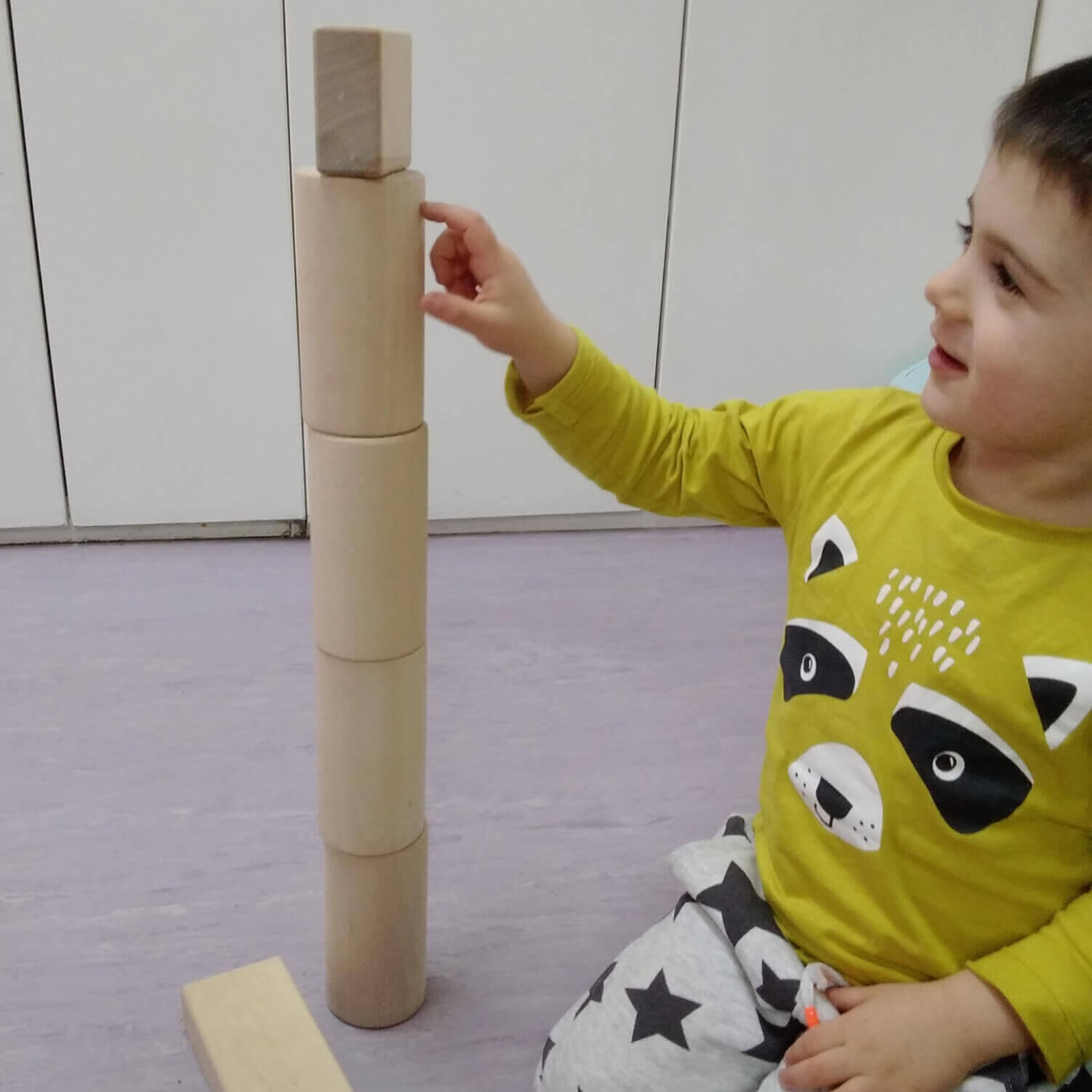
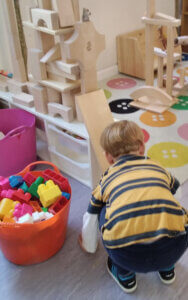
- Play with Duplo, building blocks or Marble run to provoke thoughtful and intentional learning, by making houses, ramps, aeroplanes, or something completely made up.
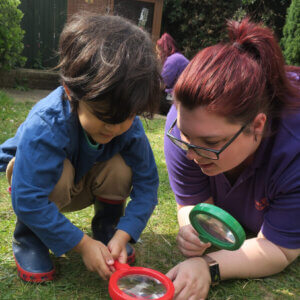
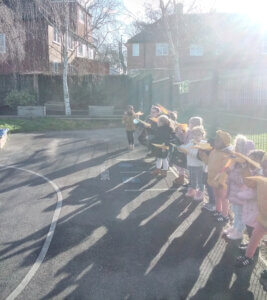
- Provide activities that prompt investigation, exploration, and purposeful thinking, such as bug hunts with a magnifying glass, cloud watching or potion making.
- Make paper aeroplanes and see how far they fly, then see if they can be adapted to fly further!
- Above all else, have fun, ask open questions, and explore different options together.
STEM and Development Matters
At Jancett Childcare we follow Development Matters, the curriculum guidance for Early Years settings. You can see how important the development of STEM in the Early Years is throughout this framework, especially in the Three characteristics of effective teaching and learning.
These are:
- Playing and exploring – children investigate and experience things, and ‘have a go’.
- Active learning – children concentrate and keep on trying if they encounter difficulties, and enjoy achievements
- Creating and thinking critically – children have and develop their own ideas, make links between ideas, and develop strategies for doing things
These three important areas closely link to exploration, making mistakes and self-motivated play as mentioned above. Take a look at Development Matters and see if you can find any further links to the development of Mathematics, Personal, social and Emotional development and even understanding the world! Development Matters
It’s true we have a literacy-based curriculum, and this is due to language being the foundation of children’s thinking and learning. By setting this baseline for learning we know that STEM blends in so well with our continuous and child-focused approach to child progression and education.
We would love to see any STEM activities you try at home, feel free to tag us on Facebook or Instagram! #JancettChildcare
Jancett Families – keep an eye on our social media and your ParentZone between the 11th and 20th March to see our mini scientists exploring the ‘what if’s’ and having fun doing it!
For more information and great activity ideas specifically for the Early Years click here -> EarlyYears (britishscienceweek.org)
Further links and resources:
Homepage – British Science Week